





















Can fungus become resistant to itraconazole?
Fungal resistance to antifungal agents, particularly itraconazole, is an escalating global concern.
Introduction:
Fungal resistance to antifungal agents, particularly itraconazole, is an escalating global concern. As one of the most commonly prescribed triazole antifungals for treating infections such as aspergillosis, histoplasmosis, blastomycosis, and onychomycosis, itraconazole's effectiveness is crucial to both immunocompromised and immunocompetent patient populations. However, increasing clinical reports and in vitro studies show that fungi are adapting, leading to resistance that compromises treatment outcomes.
What is Itraconazole and How Does It Work?
Itraconazole is a broad-spectrum antifungal agent that works by inhibiting the enzyme lanosterol 14-?-demethylase, essential for the synthesis of ergosterol, a key component of fungal cell membranes. Without ergosterol, the cell membrane becomes unstable, leading to fungal death or growth arrest.
Mechanisms Behind Itraconazole Resistance
Fungi evolve resistance through multiple molecular mechanisms, often simultaneously, rendering standard doses ineffective. Below are the key resistance mechanisms:
1. Overexpression of Efflux Pumps
Fungal cells can increase the expression of ATP-binding cassette (ABC) transporters, such as Cdr1p and Cdr2p, and major facilitator superfamily (MFS) pumps, which actively export itraconazole out of the cell.
2. Mutations in the Target Enzyme (CYP51A/B)
Mutations in the CYP51A or CYP51B genes, which code for 14-?-demethylase, alter the binding affinity of itraconazole, reducing its efficacy. These mutations are especially common in Aspergillus fumigatus.
3. Biofilm Formation
Fungal biofilms, particularly in Candida species, can significantly reduce itraconazole penetration, shielding inner cells and promoting multidrug resistance.
4. Gene Duplication and Aneuploidy
Fungi may increase the copy number of ERG11 or related genes, leading to increased enzyme production that overwhelms the drugs inhibitory effects. Aneuploidy in Candida albicans also contributes to resistance.
Environmental and Clinical Drivers of Resistance
1. Agricultural Azole Use
Azoles used in farming (e.g., tebuconazole, propiconazole) have structural similarities to itraconazole. Environmental exposure encourages the evolution of cross-resistant strains, especially in soil-dwelling fungi like Aspergillus.
2. Long-Term or Improper Antifungal Use
Inappropriate dosing, poor adherence, or empirical therapy without susceptibility testing accelerates the development of resistance by selectively allowing resistant strains to survive and replicate.
Clinical Consequences of Itraconazole Resistance
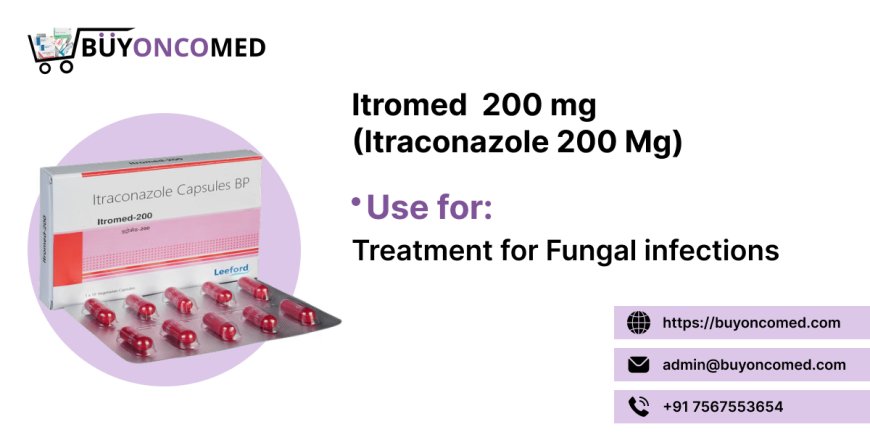
Itromed 100mg resistance leads to:
- Increased morbidity and mortality, particularly in immunocompromised patients
- Therapeutic failure despite adherence
- Need for alternative therapies that may be costlier, more toxic, or less available
- Diagnostic delays due to misinterpreting resistance as non-compliance or reinfection
Detection and Monitoring of Resistance
1. Susceptibility Testing
Broth microdilution and Etest methods help determine minimum inhibitory concentrations (MICs). An MIC > 2 g/mL for Aspergillus indicates resistance.
2. Genetic Sequencing
Detection of CYP51A mutations like TR34/L98H, common in azole-resistant A. fumigatus strains.
3. Antifungal Resistance Surveillance
Laboratories should regularly report resistance data to hospital infection control units and public health agencies.
Best Practices to Combat Itraconazole Resistance
1. Rational Prescribing
- Always use culture and susceptibility testing before prescribing.
- Avoid unnecessary prophylactic use in low-risk patients.
2. Patient Education
- Emphasize the importance of dose adherence and treatment duration.
- Warn against self-medication and incomplete courses.
3. Infection Control Measures
- Isolate immunocompromised patients when necessary.
- Ensure proper hospital ventilation systems to limit exposure to airborne fungal spores.
4. Antifungal Stewardship Programs
Hospitals should implement interdisciplinary stewardship teams involving infectious disease specialists, microbiologists, and pharmacists to regulate antifungal usage.
Conclusion:
Itromed 200 remains a critical agent in the antifungal arsenal, but the rise of resistant strains underscores the urgent need for surveillance, proper usage, and development of novel agents. Hospitals, clinicians, and public health bodies must collaborate to implement global antifungal stewardship strategies to mitigate this silent threat.
Frequently Asked Questions (FAQs)
Can fungi naturally resist itraconazole without prior exposure?
Yes. Environmental azoles and spontaneous genetic mutations can lead to intrinsic or primary resistance even without clinical exposure.
Is itraconazole resistance permanent?
Resistance is often stable and maintained through cell generations, making it difficult to reverse once established.
Can itraconazole resistance spread from person to person?
Not directly. Resistance typically arises in individual fungal populations, but airborne resistant spores (especially from Aspergillus) can infect others.
Does itraconazole resistance affect other azoles?
Often, yes. Cross-resistance to voriconazole, posaconazole, and other azoles is common due to shared molecular targets.
Visit Our Site: Buyoncomed