



















Trading vs Investing: Which One’s Right for You?
Explore the key differences between trading vs investing. Learn about trade life cycle, stock market coaching, and stock market classes for smart decisions.

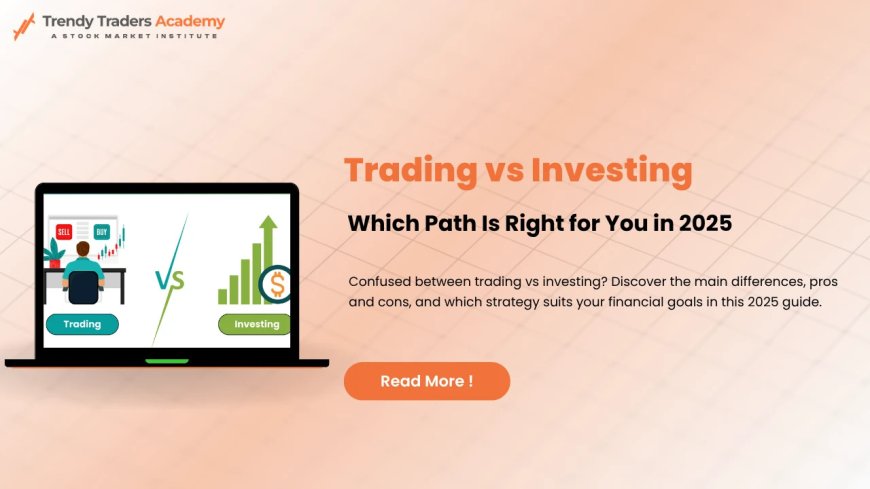
Trading vs Investing: What's the Real Difference?
Have you ever looked at the stock market and wonderedShould I trade or invest? Its a bit like choosing between a sprint and a marathon. Both get you to a destination, but the journey is entirely different. If you're someone eager to build wealth, understand how the market works, or perhaps just curious about how professionals do it, this guide is for you.
Lets break things down using simple language, real-life analogies, and a conversational tone that makes this financial topic easy (and even fun!) to grasp.
Explore the key differences between trading vs investing. Learn about trade life cycle, stock market coaching, and stock market classes for smart decisions.
Introduction to Trading and Investing
If you've ever heard someone say, I made a killing in the stock market! chances are, they were either trading or investing. While both involve buying and selling financial instruments like stocks, they are fundamentally different in strategy, time, and risk.
Lets explore the core differences and find out what suits you best.
What is Trading?
Trading is like a fast-paced game. Think of it like flipping housesyou buy low, sell high, and move on quickly. Traders look for short-term opportunities to profit from price changes. They might hold a stock for just minutes, hours, or days.
Types of trading include:
-
Day Trading Buying and selling within the same day.
-
Swing Trading Holding positions for several days.
-
Scalping Making dozens or even hundreds of trades in a day.
-
Position Trading Holding for weeks or months, still shorter than investing.
Its active, time-intensive, and demands quick decision-making.
What is Investing?
Investing, on the other hand, is like planting a tree. You water it, nurture it, and wait patiently. Investors buy and hold assets for the long term, aiming for steady growth over yearssometimes decades.
Investing is less about market timing and more about choosing strong companies or assets that will grow with time. Think Warren Buffet-style wealth building.
The Mindset: Trader vs Investor
Mindset matters. Traders need:
-
Discipline to stick to their strategies.
-
Speed to react fast.
-
Emotional control to handle ups and downs in real-time.
Investors need:
-
Patience to wait out market cycles.
-
Confidence in their chosen assets.
-
Long-term vision that goes beyond daily price movements.
If youre someone who loves fast results, trading might suit you. If you prefer a more relaxed, hands-off approach, investing is your lane.
Goals: Quick Gains vs Long-Term Wealth
Ask yourself: Am I trying to make quick money, or build wealth slowly?
-
Traders look for short-term profits. They often set daily, weekly, or monthly goals.
-
Investors aim for long-term growthlike retirement planning, childrens education, or real estate purchases.
Both can be profitable. But your goals define your path.
Time Commitment: Active vs Passive
Trading is practically a full-time job. It requires regular market analysis, monitoring news, technical indicators, and more.
Investing is more passive. You can research once, invest, and check your portfolio every few months.
So, what suits your lifestyle betterconstant attention or a set it and forget it model?
Understanding the Trade Life Cycle
Whether you're trading or investing, you must know the trade life cycle. Heres a simplified version:
-
Order Placement You place a buy/sell order.
-
Order Matching The exchange finds a counterparty.
-
Trade Execution Your order is fulfilled.
-
Clearing Brokers and exchanges confirm the transaction.
-
Settlement Securities and cash are exchanged (usually T+1 or T+2 days in India).
Understanding this cycle helps in managing expectations and planning cash flows, especially for traders who rely on speed and efficiency.
Risk Involved: Fast vs Slow Burn
Theres no such thing as a risk-free path in the market. But:
-
Trading carries higher risk due to short holding periods and market volatility.
-
Investing spreads the risk over time, reducing the impact of short-term dips.
If you can't stomach daily losses, you might lean toward investing. If you can manage risk and losses logically, trading could work.
Tools & Resources Youll Need
Traders require:
-
High-speed internet
-
Real-time charts and indicators
-
Trading terminals like Zerodha Kite or Upstox Pro
-
Technical analysis skills
Investors need:
-
Basic financial knowledge
-
Long-term market trends
-
A good broker for execution
-
Patience and diversified portfolios
Role of Stock Market Coaching
If youre serious about either path, stock market coaching can accelerate your learning. A good coach helps you:
-
Avoid costly mistakes
-
Understand the trade life cycle in detail
-
Build your own strategy
-
Handle emotional ups and downs
Coaching bridges the gap between theory and real-world experience.
Stock Market Classes: What You Learn
Structured stock market classes are goldmines of knowledge. You learn:
-
How to read charts
-
How to value a company
-
Strategies for trading and investing
-
Risk management techniques
-
Psychology of the market
Whether youre a beginner or intermediate, classes help shape your financial thinking.
Taxes: Short-Term vs Long-Term Capital Gains
Yes, even your profits talk to the taxman.
-
Short-Term Capital Gains (STCG): Applies to profits from shares held less than 12 months. Taxed at 15%.
-
Long-Term Capital Gains (LTCG): Applies to shares held longer than 12 months. Taxed at 10% on gains above ?1 lakh.
This tax difference often tilts people toward long-term investing.
Common Mistakes to Avoid
Traders often:
-
Overtrade due to excitement
-
Ignore stop-losses
-
Trade without a strategy
Investors often:
-
Panic sell during market crashes
-
Dont diversify enough
-
Follow the herd blindly
Avoid these to protect your capital and peace of mind.
How to Choose Whats Best for You
Heres a quick comparison to help you decide:
|
Aspect |
Trading |
Investing |
|
Time Involvement |
High |
Low |
|
Holding Period |
Minutes to weeks |
Years |
|
Risk |
High |
Moderate to Low |
|
Knowledge Required |
Advanced technical |
Basic to intermediate |
|
Emotion Management |
Critical |
Important |
|
Profit Expectation |
Fast, small, frequent |
Slow, steady, larger |
Choose based on your risk tolerance, time availability, and financial goals.
Conclusion: Sprint or Marathon?
To wrap it uptrading and investing are like choosing between a sprint and a marathon. Both require preparation, tools, and mindset, but your personal goals will determine which path fits best.
Whether you choose the thrill of trading or the patience of investing, learning the trade life cycle, seeking proper stock market coaching, and attending stock market classes will always be a smart first step.
Remember, the stock market isnt just about money. Its about discipline, learning, and long-term thinking.
FAQs
1. Can I both trade and invest in the stock market?
Yes! Many people trade for short-term income and invest for long-term goals. Just ensure you manage your capital accordingly.
2. Is trading riskier than investing?
Generally, yes. Trading involves quick decisions and market timing, which increases risk. Investing is more stable if done wisely.
3. Do I need stock market classes to start?
While not mandatory, stock market classes can fast-track your success and help avoid beginner mistakes.
4. What is the trade life cycle and why is it important?
The trade life cycle involves the entire process from placing a trade to final settlement. Understanding it helps you plan better and reduce risks.
5. How long does it take to become a successful trader or investor?
It varies. With consistent learning and perhaps stock market coaching, it may take months to years to see consistent results.